Home | MyGov

Accessibility
Accessibility Tools
Color Adjustment
Text Size
Navigation Adjustment
Screen Reader iconScreen Reader

Draft Standards for Smart Cities in India

Draft Standards for Smart Cities in India
Start Date :
Dec 02, 2016
Last Date :
Dec 21, 2016
00:00 AM IST (GMT +5.30 Hrs)
Submission Closed

Smart Cities Mission is one of its kinds and does not follow a ‘one-size-fits-all’ approach. Only a broad framework has been given to cities in which they have to ...

Smart Cities Mission is one of its kinds and does not follow a ‘one-size-fits-all’ approach. Only a broad framework has been given to cities in which they have to conceptualize their idea of a Smart City and plan their pathway to ‘smartness’.

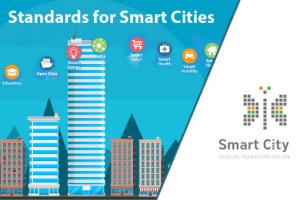
Ministry of Urban Development has so far selected 60 Smart Cities in various rounds and based on the Smart City Proposals submitted by Cities, this Ministry has started the process to set the standards for the Smart Cities in India. 16 key features have been outlined, which form the guiding framework for the development of Smart Cities in India. Cities have used this framework to determine their pathway towards ‘smartness’ in their SPVs. The framework includes criteria for Smart City features, induction and the benchmarks. Importantly, there are four stages defined in the pathway of Cities towards smartness. Starting with the baseline condition the Smart Cities will progress through the following stages -

• Level 1 – Base case where service levels are less than 50% of the prescribed benchmark
• Level 2 – Service levels are more than 50% of the prescribed benchmark
• Level 3 – Service levels are more than 75% of the prescribed benchmark
• Level 4 – Advanced stage where prescribed benchmark has been achieved

Co-creation of ideas, strategies, innovative and frugal solutions through an extensive consultative process with all stakeholders is mandated in the Smart Cities Mission Guidelines. Therefore, to finalize the standards for Smart Cities, this Ministry has decided to invite suggestions on the draft Standards. Citizen from all walks of life are welcome to be a part of the consultative process and provide valuable inputs. The last date of submission of suggestions is 20th December 2016.

Click here to read the Draft Standards for Smart Cities.

Reset
Showing 283 Submission(s)
Bhaskar Puri
Bhaskar Puri 9 years 6 months ago
Contd from previous comment... This creation of a economic and residential "black hole" right in the centre then creates a whole host of problems: 1. Increases urban sprawl 2. Increases travel times 3. Decreases efficiency of transportation with large number moving to one corner of the city for work and then coming back. This creates huge traffic snarls, pollution 4. Increase in urban sprawl decreases efficiency of area coverage of public transportation and reduces last mile connectivity.
Bhaskar Puri
Bhaskar Puri 9 years 6 months ago
Respected Modi Ji I have one suggestion for the layout of smart cities. Kindly ensure the the central districts of the city have a high population density and suitable corporate taxation laws to encourage businesses to set up their offices there. Too many of India's cities have been ruined by British era thinking of trying to maintain a leafy, low density city centre which looks good on the eye but ruins the transportation of the city, artificially increasing distances in the city.
Bohra Rajesh M
Bohra Rajesh M 9 years 6 months ago
We should start a smart card like Octopus Card in Hong Kong, Easypass card in Taiwan. This will greatly help in cashless society. To undertand more details, pls visit www.octopus.com.hk/about-us/en/index.html
dasari srinivasulu naveen
dasari srinivasulu naveen 9 years 6 months ago
No cash to be accepted in the smart city only digital money should be used using adharcard no (with secure pin) or through an common government mobile application , there should be recharge outlets at bus stand, railway station and airport or they can recharge thru atms or online banking so that they can they can load cash in their Adhara card or mobiles application. By this way we can reduce crime, corruption and all illegal activities in the city which helps in good governance and a safe city
Prasad_2
Prasad_2 9 years 6 months ago
10) if panic button is pressed, A software should trigger an alert to local police with a snapshot of CCTV in that vicinity and vechile number plates entering and leaving the premise
Prasad_2
Prasad_2 9 years 6 months ago
continuing my suggestion... 4) All CCTV standard should be pre-defined. 5) All CCTV mounting, angles, blind spot etc should be adhered. 6) CCTV inside entire Smart City should IPv6 addressable, with direct addressing 7) Outage and repair of CCTV is shop owner's responsibility. 8) Geo sensors and CCTV control software should be integrated using internet of things 9) if any user activating Panic Button should have the following sequence of event (my next suggestion)
Prasad_2
Prasad_2 9 years 6 months ago
This suggestion is related to Securing Smart City. In-order to make the city secure, govt should define City Digital Surveillance Policy. This policy should cover the following policy and procedure 1) All Public Areas within the City should be under Security Surveillance 2) Govt should have mandatory CCTV (IP Multicast based) as per licensing of the shop or office. Be it bar, barbershop or gorcery shop 3) All CCTV recording should be local and free secured cloud server
Bharath Bhushan Lohray
Bharath Bhushan Lohray 9 years 6 months ago
Please introduce Direct Democracy for City Halls. Here I state "Direct Democracy" for gathering public opinion and not for decision making. Direct Democracy is usually good for small populations and representative based democracy is good for large populations. But with the advent of internet and large capacity data processing, the population constraint has become irrelevant. Please include this in the policy to run test projects on implementing public opinion polling on all decisions.
ashish sharma
ashish sharma 9 years 6 months ago
Merit on % of conventional energy sources vs unconventional energy sources. % of employment. % of aadhar/pan/voter card holders. Cleanliness. Alignment towards national goals. % of people Joining defense, % of people joining. % of people earning less than 3 lac per year (negative point, as these people will not take part in taxation. Branding of your own City in education, employment, tourism etc. Safety: Number of security incidences, Pollution reading