Home | MyGov

Accessibility
Accessibility Tools
Color Adjustment
Text Size
Navigation Adjustment
Screen Reader iconScreen Reader

Draft Standards for Smart Cities in India

Draft Standards for Smart Cities in India
Start Date :
Dec 02, 2016
Last Date :
Dec 21, 2016
00:00 AM IST (GMT +5.30 Hrs)
Submission Closed

Smart Cities Mission is one of its kinds and does not follow a ‘one-size-fits-all’ approach. Only a broad framework has been given to cities in which they have to ...

Smart Cities Mission is one of its kinds and does not follow a ‘one-size-fits-all’ approach. Only a broad framework has been given to cities in which they have to conceptualize their idea of a Smart City and plan their pathway to ‘smartness’.

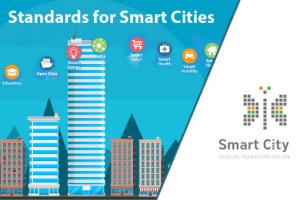
Ministry of Urban Development has so far selected 60 Smart Cities in various rounds and based on the Smart City Proposals submitted by Cities, this Ministry has started the process to set the standards for the Smart Cities in India. 16 key features have been outlined, which form the guiding framework for the development of Smart Cities in India. Cities have used this framework to determine their pathway towards ‘smartness’ in their SPVs. The framework includes criteria for Smart City features, induction and the benchmarks. Importantly, there are four stages defined in the pathway of Cities towards smartness. Starting with the baseline condition the Smart Cities will progress through the following stages -

• Level 1 – Base case where service levels are less than 50% of the prescribed benchmark
• Level 2 – Service levels are more than 50% of the prescribed benchmark
• Level 3 – Service levels are more than 75% of the prescribed benchmark
• Level 4 – Advanced stage where prescribed benchmark has been achieved

Co-creation of ideas, strategies, innovative and frugal solutions through an extensive consultative process with all stakeholders is mandated in the Smart Cities Mission Guidelines. Therefore, to finalize the standards for Smart Cities, this Ministry has decided to invite suggestions on the draft Standards. Citizen from all walks of life are welcome to be a part of the consultative process and provide valuable inputs. The last date of submission of suggestions is 20th December 2016.

Click here to read the Draft Standards for Smart Cities.

Reset
Showing 283 Submission(s)
PRAKASH TELI
PRAKASH TELI 9 years 6 months ago
स्मार्ट सिटी हमेशा की लिये स्मार्ट रहने के लिये और smart सिटी का Status हमेशा बरकार रखने के लिये पब्लिक & CSR fund के लिये जनता से अपील करे
Kedar Patankar
Kedar Patankar 9 years 6 months ago
1. They need to have a directly elected mayor that is responsible for the entire city. This will bring accountability. 2. Smart cities need to have traffic systems that are integrated, centrally monitored and adaptable to traffic patterns. 3. Smart cities need enforcement of traffic rules by emailing/posting fine notices to people. No traffic cop should have power to charge on-the-spot fines. Unpaid fine[s] should result in confiscation of vehicle & criminal proceedings.
purushothaman p
purushothaman p 9 years 6 months ago
Making existing cities smart from where they are both tricky and opprtunity for employment creation and engaging youth, skill development! Transparency, involving all stakeholders and quick response are some interest. Can I involve in this in my city or close my city?
Praveen
Praveen 9 years 6 months ago
The Target for compactness criteria-The city is highly compact and dense, making the most of land within the city.Please provide evidence that the above criteria is in the best interest of India&not in favour of Real Estate Developers. Your Ministry Addl Secretary Mr Sameer Sharma personal opinion in blog.mygov.in "Typically, denser,mixed land-use compact cities are more liveable. However, in Indian cities the relationship between urban density and liveability is not consistently positive".
balu mn
balu mn 9 years 6 months ago
-roads must get wider where there are steep turns and near traffic signals. -there must be more apartments than independent houses as in a less space 100- 150 people can live. or maybe skyscrapers. -metro must be widened and people must be compensated. -in highways and flyovers alternative lights can be solar powered. saves electricity -there must be a frequent check weather sewage's are treated or not. -there must be better drainage system such as in Dubai. its more of cleanliness...
nidhi dhanotiya
nidhi dhanotiya 9 years 6 months ago
1) Ban Plastic in smart cities (Plastic is monster to mankind). 2) Cashless Business. 3) Waste seggregate mandotory (Fine imposed ) . 4) Planned layouts with urban forest (instead of garderns) surrounding layouts 5) Smart city should be Green City . 6) No income tax . Tax will be only on goods and services.
balu mn
balu mn 9 years 6 months ago
to improve or development of cities is to -Go cashless, as now if its all through software and card no one needs to worry because now no one can do anything for black money -Check all land owning of people to see whether they have built it illegally or any place where sewage was supposed to built. then take that land put it some public use. -roads should be constructed properly throughout the places even in small streets properly. slum areas can be converted.
Laxmiknt Rashingkar
Laxmiknt Rashingkar 9 years 6 months ago
Durable roads is the main thing for streamlined traffic. Many new techniques should be used in the construction of roads. Some of these are use of rubber or use of plastic in tar roads. Such roads are constructed in Kerala & Tamil Nadu. Use of slug which is generated in the melting of iron ores is also a new technique invented by an Indian engineer, Dr. Vijay Joshi of Thane, Maharashtra. He has built such roads in Australia. The menace of plastic & slug will also be eliminated.
Amulya Patnaik
Amulya Patnaik 9 years 6 months ago
smart cities must specifically focus on traffic management by rehabilating all vending and business activities including monopolised encroachments which are beyond control.This will reduce traffic congestion for accident reduction.
Sreejith VK
Sreejith VK 9 years 6 months ago
1.Preferential VAT system to cash and non-cash systems. 2.100% cashless payment facility for public transportation. Prepaid card for tap payment facility which work with any public transport facility. 3.Telecom operators should provide free data services for UPI-based apps.